
Traveling to Morocco with a newborn
Key takeaways
- Marrakech can be very warm, and a newborn regulates temperature far less efficiently than an adult, water makes up roughly 70% of an infant's body, so dehydration sets in quickly.
- Many accept infants from 7 days, often with a medical certificate; the 2-to-3-month window is the most comfortable choice.
Dreaming of discovering Morocco with your little one? Traveling to Morocco with a newborn can feel intimidating, but with the right preparation it is entirely achievable, and genuinely wonderful. At Little Nomad, the baby-equipment rental and family-travel specialist in Marrakech, we help many parents who take the plunge during their child’s very first months. This guide, updated for 2026, gathers everything that matters for traveling to Morocco with a newborn: from what age a baby can fly, how to prepare the stay, how to protect your baby from the heat, and how to choose the right equipment once you arrive.
Key figures for family travel in Morocco (2026)
Morocco, and Marrakech in particular, has never been more popular with families. Here are the recent figures that put your trip with a baby into context.
| Indicator | Value | Period |
|---|---|---|
| Tourist arrivals in Morocco | 19.8 million (+14%) | 2025 |
| Tourism revenue | ~124 billion MAD | 2025 |
| Passengers at Marrakech-Menara Airport | over 10.2 million (+10%) | 2025 |
| Airport’s top route | Paris-Orly | 2025 |
| Parents traveling with a child under 5 | 62% | 2025 |
| Morocco’s arrivals target | 26 million | 2030 |
In short, you are far from alone: a steady stream of families lands in Marrakech every week, and the city’s infrastructure has adapted accordingly, from family-friendly riads to baby-equipment rental delivered straight to your accommodation.
From what age can a newborn fly?
For a baby born at term and in good health, air travel is generally not contraindicated after the first few weeks. Most airlines accept infants from a certain age, but the rules vary, so always check your carrier’s policy before booking. As a rule of thumb, the table below summarises what to expect.
| Baby’s age | Recommendation |
|---|---|
| Under 7 days | Often refused, or subject to a medical certificate depending on the airline |
| 7 days to 2 months | Possible, but better postponed if you can wait; extra caution advised |
| 2 to 3 months and over | The ideal window: first vaccinations done, more mature immunity |
The flight from Europe to Marrakech is short, only a few hours, which keeps the disruption to your newborn’s routine to a minimum. To help your baby balance the pressure in their ears, offer a feed (breast or bottle) precisely during take-off and landing.
It is also worth remembering that the decision is medical as much as administrative. Before booking, ask your paediatrician to confirm that your baby is fit to fly, particularly if the birth was premature or if there were any respiratory concerns. A car seat remains the recommended restraint for every road journey throughout childhood, typically until around 10 to 12 years of age, so getting comfortable with one from the very first transfer in Marrakech sets a good habit for the years ahead.
Preparing your trip: the essential checklist
Good preparation is what turns a daunting idea into a smooth, enjoyable trip. The key is to bring only what is strictly personal and to rent the bulky items on site rather than dragging them through an airport. Here is how to split the load.
| To bring with you | To rent on site |
|---|---|
| Nappies, clothes, care kit | Travel cot and a compliant mattress |
| Formula/bottles, comforter | Compact stroller (Yoyo type) |
| Baby carrier, hat, sunscreen | High chair, baby bath |
| Documents and prescriptions | Car seat for journeys |
Renting a travel cot and the rest of the bulky gear locally means you travel light and arrive to a room that is already baby-ready. It is the simplest way to avoid lugging a cot, a stroller and a car seat across two airports with a newborn in your arms.
Protecting a newborn from the Moroccan heat
Marrakech can be very warm, and a newborn regulates temperature far less efficiently than an adult, water makes up roughly 70% of an infant’s body, so dehydration sets in quickly. Keep your baby in the shade, especially between late morning and mid-afternoon, dress them in light, breathable cotton, and never leave them in direct sun or in a parked vehicle. Offer feeds more frequently to keep them hydrated, and use a wide-brimmed hat and a stroller with a generous canopy. Plan outings for the early morning or the cooler evening hours, and treat the midday peak as nap time indoors.
The signs of overheating in a newborn are easy to miss, so check regularly for flushed skin, rapid breathing or unusual drowsiness, and move indoors at the first hint. A lightweight muslin draped over, but never sealing, the stroller can add shade without trapping heat. Air-conditioned riads provide a welcome refuge in the hottest part of the day, and a quick sponge with lukewarm water can help your baby cool down gently before a nap. Spring and autumn are the most comfortable seasons to visit with a very young child, while high summer calls for stricter timing of every outing.
From the airport to the riad: organising your arrival
The main challenge begins the moment you step out of Marrakech-Menara Airport. Rather than hunting for a taxi in the heat with a newborn in your arms, book a transfer in advance fitted with an approved rear-facing car seat, required in Morocco for the youngest passengers. The drive to your riad is then safe and stress-free, with no last-minute improvisation. For the stroll between the airport pick-up and your accommodation’s door, a car seat booked ahead removes the single biggest source of arrival-day friction.
Health and peace of mind: the right reflexes on the ground
Use bottled water to prepare bottles, and maintain the cold chain for any milk you carry. Locate a pharmacy in advance and, if needed, a paediatrician near your accommodation, large cities such as Marrakech have good-quality health facilities. Keep your child’s health record and your doctor’s contact details on you at all times. On the emotional side, keep things in perspective: millions of families travel each year with very young children, and Morocco is a welcoming, family-accustomed destination. By relying on equipment rental and suitable accommodation, you free yourself from the logistics and can fully enjoy these first travel memories.
Pack a small medical kit with a digital thermometer, infant paracetamol in the dose advised by your doctor, saline drops and any prescription your baby already takes, keeping medicines in their original packaging. Travel insurance that explicitly covers your infant is well worth arranging before departure. Sun protection deserves the same care as heat protection: keep newborns out of direct sun entirely, and for older babies use a physical sunscreen on the small areas that clothing cannot cover.
Why Morocco is an ideal destination with a baby
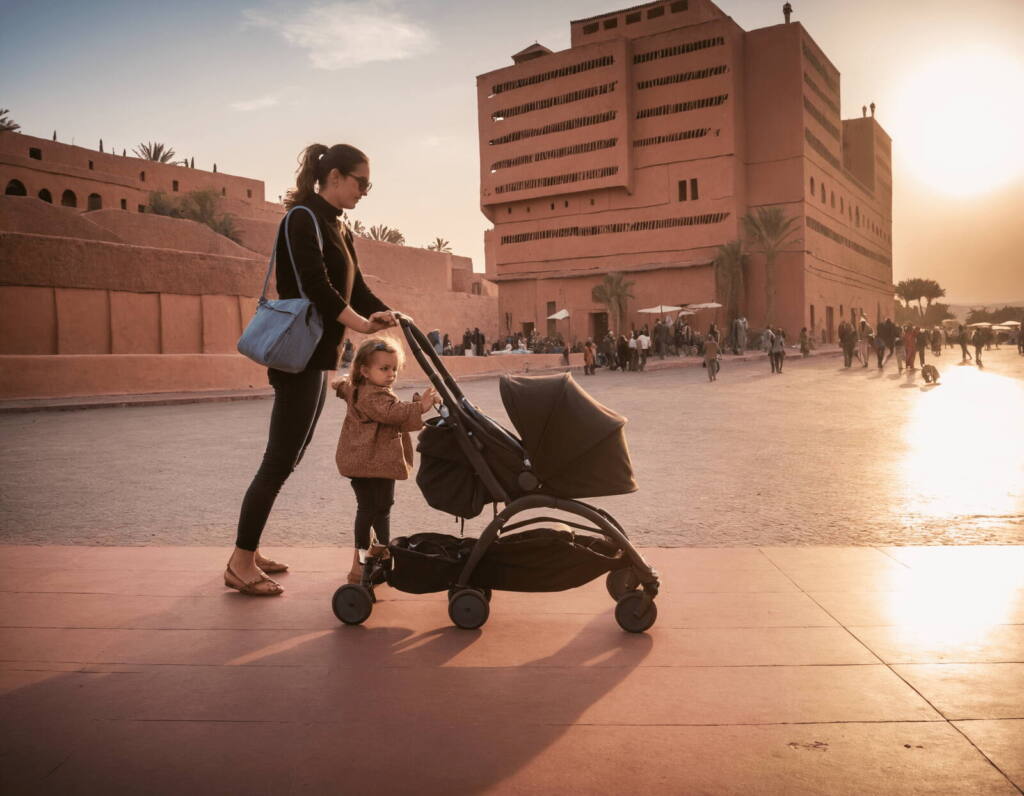
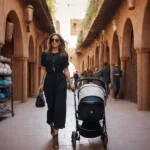
Beyond the logistics, Morocco appeals to new parents through its proximity and its deeply child-friendly culture. From Europe the flight is short, barely a few hours to Marrakech, which limits an infant’s fatigue. Once there, families are met with warmth: children are genuinely welcomed in riads, restaurants and souks alike. The combination of a short flight, a forgiving time difference, year-round sunshine and easy access to baby equipment makes Morocco one of the most practical long-weekend or first-trip-abroad choices for a family with a newborn. A gentle stroll through the medina with a stroller quickly becomes one of the trip’s simplest pleasures.
Practical details reinforce the appeal. Pharmacies are plentiful and well stocked, bottled water is available everywhere, and many riads are happy to warm a bottle, store milk in a fridge or arrange a cot on request. Distances within the city are short, so a typical day rarely involves more than a brief transfer, leaving plenty of room for the slow, unhurried pace that suits a newborn. For parents taking their first trip abroad as a family, that blend of comfort, warmth and convenience is exactly what turns an ambitious plan into a relaxed reality.
FAQ, Traveling to Morocco with a newborn
What is the minimum age to fly with a baby?
For a healthy, full-term baby, flying is usually possible from a few weeks old, but each airline sets its own minimum. Many accept infants from 7 days, often with a medical certificate; the 2-to-3-month window is the most comfortable choice.
Does my newborn need a passport?
Yes. Every traveller, regardless of age, needs their own valid passport to enter Morocco. Apply well in advance, as processing a first infant passport can take several weeks.
How do I protect my baby from the heat in Morocco?
Keep your baby in the shade, dress them in light cotton, use a hat and a stroller canopy, feed them more frequently to maintain hydration, and avoid the midday peak by planning outings for early morning or evening.
What should I bring and what can I rent on site?
Bring personal items, nappies, clothes, formula, a comforter, documents and prescriptions. Rent the bulky gear locally: travel cot, compact stroller, high chair, baby bath and car seat, all delivered to your accommodation.
How do I manage the airport transfer with a newborn?
Book a private transfer in advance fitted with an approved rear-facing car seat. This is both safer and far less stressful than searching for a taxi in the heat on arrival.
Which water should I use for bottles?
Use bottled water to prepare bottles and maintain the cold chain for any milk you carry. This is the simplest way to avoid any stomach upset for your baby.
How long should I give the baby to acclimatise?
Allow a calm first day with no demanding plans so your baby can adjust to the new environment, the warmth and the routine. A relaxed arrival sets the tone for the rest of the stay.
Case study: a 6-week-old newborn arriving in Marrakech
To make the preparation more concrete, let’s follow a family arriving in Marrakech with a six-week-old infant. The paediatrician has given the green light for the flight: at this age, flying is not contraindicated for a healthy, full-term baby, provided the pressure is well managed during take-off and landing. The parents therefore plan a feed at the exact moment the aircraft changes altitude, which helps the newborn balance the pressure in their ears.
The main challenge begins as they leave Marrakech-Menara Airport. Rather than looking for a taxi in the heat with a newborn in their arms, the family booked a transfer in advance fitted with an approved rear-facing car seat, compliant with Moroccan rules for the youngest passengers. The journey to the riad is therefore safe, with no improvisation. On site, an approved travel cot had been delivered to the room before their arrival, so the baby has a familiar, safe place to sleep from the very first night. With the logistics handled, the parents spend their first day quietly, letting their newborn acclimatise before venturing out into the medina in the cooler evening hours.
Simulator: which equipment for your stay?
Enter your child’s age and the profile of your stay to get, in a single click, the list of equipment suited to Marrakech.
🧳 Simulator: which equipment do you need?
Answer 4 questions for a personalised recommendation.
Conclusion
Traveling to Morocco with a newborn is far less daunting than it first appears. With a short flight, a welcoming culture, good-quality health facilities and equipment you can rent on arrival, Marrakech is a reassuring choice for a first family trip. Prepare the essentials, protect your baby from the heat, secure the airport transfer with a proper car seat, and let local rental take care of the rest, so you can focus on the memories rather than the logistics.


Comments are closed.