Choosing a Camel Ride in Marrakech With Children
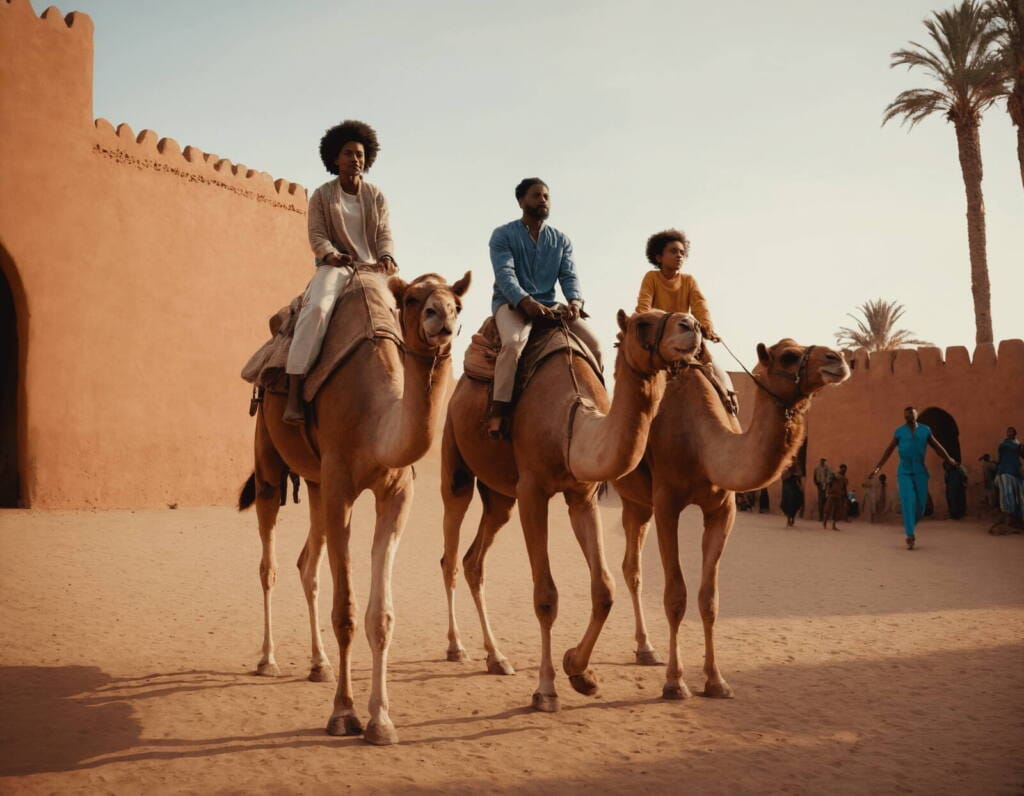
At Little Nomad, a specialist in baby equipment rental in Marrakech, we advise families every week who dream of an activity that is gentle, exotic and suited to little ones. Updated in 2026, this guide helps you choose a camel ride in Marrakech with children in complete peace of mind: the minimum age, where to do it, the price, and above all what baby gear to plan so the outing stays a pleasure. A ride on the back of a dromedary in the Palmeraie is one of the first experiences families try when they arrive, because it is short, accessible and photogenic. You just need to approach it with the right safety and comfort reflexes, which we detail here from our field experience.
Key figures for camel rides in Marrakech (2026)
A few reference points help explain why this activity appeals to families so much and how to place it within the Moroccan tourism context. Morocco is enjoying record visitor numbers and Marrakech remains the favoured gateway for travellers with children. The data below, drawn from official sources and from observations with operators, sets the scene for your outing.
| Indicator | Value (2025-2026) | Source |
|---|---|---|
| Recommended minimum age to ride accompanied | from 3 years (carried for the youngest) | Palmeraie operators |
| Duration of a family ride | 1h to 2h depending on the package | Palmeraie operators |
| Indicative price per person | from around £17 (about €20), transfers sometimes included | Local operators |
| Tourist arrivals in Morocco in 2025 | 19.8 million (+14%) | Ministry of Tourism |
| Marrakech-Menara airport passengers 2025 | over 10.2 million (+10%) | ONDA / press |
| Parents travelling with a child under 5 | 62% | Family-sector studies |
These figures reveal two useful things for planning your ride. First, the activity is designed as a reliable highlight of the stay. Second, record attendance means morning and late-afternoon slots are sought after: booking in advance and choosing a gentle hour, out of the full sun, clearly improves a child’s comfort.
From what age can a child ride a camel?
This is the first question parents ask, and the answer deserves some nuance. Most Palmeraie operators accept children from three years old, seated in front of an adult who holds them firmly throughout the ride. Below that age, you do not put the baby on the animal alone: you favour carrying by a parent who stays on foot beside the dromedary, or you choose a very short package where the adult holds the little one against them. The aim is to avoid any risk of falling linked to the animal’s broad movements, especially when it stands up and kneels down.
A child’s temperament matters as much as their age. A toddler sensitive to strong smells or to animals may be unsettled. It is then better to start by watching the dromedaries from the ground, let them get used to it, then attempt a brief mount if the child is reassured. This gradual approach, which we also recommend for other first animal experiences, avoids tears and turns the ride into a good memory rather than an ordeal.
Where to do the ride: the Palmeraie and surroundings
The Marrakech Palmeraie is the emblematic spot for this activity. Located a few kilometres north-east of the city, it offers sandy tracks lined with palm trees, easy to reach and ideal for a first family ride. The setting is exotic without being demanding, and the city’s proximity allows a quick round trip, perfect for scheduling the outing around the baby’s nap. Many operators offer packages including transfer from your riad, which simplifies logistics with a little one.
For families who want to extend their discovery, other gentle nature outings work well. If you enjoy this kind of escape, our guide to exploring the Ourika valley as a family details a cool day in the Atlas, while our article on Lake Lalla Takerkoust with a baby offers a waterside alternative. The camel ride fits very well into a varied programme, as a short and memorable half-day activity.
| Location | Distance from centre | Family advantage |
|---|---|---|
| Palmeraie | ~10 km | Easy tracks, transfers included, short duration |
| Around Agafay | ~30 km | Desert scenery, sunsets |
| Ourika area | ~30 km | Coolness, combinable with the river |
Whatever the site, favour the early or late slots of the day. The midday sun in Marrakech can be hard on a child, and shade is rare on the tracks. A morning ride, followed by a return to the riad for the nap, is the most comfortable rhythm for a little one.
What baby gear to plan for the ride
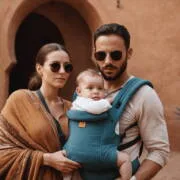
A successful ride with a little one rests on three pillars: sun protection, secure carrying and hydration. The ergonomic baby carrier is the number-one ally, because it lets a parent keep the child against them while walking beside the animal, or reassure them just before and after the mount. It holds the child in a hip-healthy position and keeps your hands free, a precious advantage on sandy ground. To reach the Palmeraie by car, an approved car seat remains essential, as we point out in our guide to the compulsory car seat in Marrakech.
Sun protection is never neglected on a track without shade: wide-brimmed hat, high-protection cream reapplied regularly, light covering clothes and suitable sunglasses. Also plan a water bottle, a snack and what you need to change the baby. The table below sums up the useful gear and indicates what you can rent rather than carry from home.
| Gear | Use during the ride | Rent or bring? |
|---|---|---|
| Ergonomic baby carrier | Secure and reassure the little one | Rent on site |
| Car seat group 0+/1 | Journey to the Palmeraie | Rent on site |
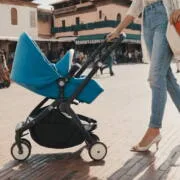
| All-terrain stroller | Approaches and car park, before the ride | Rent on site |
| Hat, cream, sunglasses | Sun protection on the track | Bring |
| Water bottle and snack | Hydration and comfort | Bring |
Avoid overloading the child with clothes: heat rises quickly on the sand. Prefer breathable, covering fabrics that protect from the sun without being too warm. A small damp cloth kept in a soft cool bag lets you refresh the baby’s neck between highlights.
Safety and animal welfare
Choosing a respectful operator is part of a responsible approach, and it is also a guarantee of safety for your child. Watch the condition of the animals: a well-treated dromedary, neither overloaded nor harassed, will be calmer and therefore safer. Good operators walk on foot, hold the animal while it stands up and kneels down, and do not impose a fast pace. A good professional adapts the duration to the child and does not hesitate to cut it short if the little one seems anxious.
As for getting on, the child must always be held firmly by the adult, never left alone on the saddle. The moment the animal rises is the most delicate: it tips forwards and backwards, and that is when you must brace the little one well. If your child is under three, consider instead a ground-level package, where you walk beside the dromedary while carrying the baby. The souvenir photo will be just as lovely, and the safety far better.
Case study: a morning in the Palmeraie with a 3-year-old
To illustrate our advice concretely, imagine a British family on a five-day stay in Marrakech, with a three-year-old girl and a ten-month-old baby. The day before, the parents book an ergonomic baby carrier, an all-terrain stroller and a car seat from Little Nomad, and choose a Palmeraie operator offering transfer and a one-hour package, set for 9am to enjoy the morning coolness.
On site, the parents take the time to let the little girl watch the dromedaries from the ground, then she rides in front of her father, who holds her firmly while the animal stands up. The ride goes at a walk, at a calm pace, with stops to look at the palm trees. Meanwhile, the ten-month-old stays against his mother in the carrier, in the shade of a palm tree, perfectly protected from the sun by a hat and light clothing. On the way back, around 10.30am, everyone heads to the riad for the nap. The verdict: a memorable activity, successful photos, no logistical stress, and gear returned at the end of the stay without having cluttered the suitcases. This is exactly the experience Little Nomad aims to make possible.
Your camel ride checklist
Here is the list to run through before you set off, to combine safety, comfort and good memories.
- Choose an operator who respects the animals and families, with a guide on foot;
- Book a morning or late-afternoon slot, out of the full sun;
- Check the minimum age and opt for carrying if the child is under 3;
- Rent a baby carrier, car seat and stroller delivered to the riad;
- Protect from the sun: hat, high-protection cream, sunglasses, covering clothes;
- Bring water, a snack and what you need to change the baby;
- Hold the child firmly when the animal stands up and kneels down;
- Cut the ride short without hesitation if the little one seems anxious.
A note on terminology and the best season
One detail often surprises English-speaking visitors: the animals you ride in Marrakech are almost always dromedaries, the single-humped species, even though they are commonly called “camels” in everyday English. It changes nothing about the experience, but it is a nice fact to share with curious children. As for timing, spring (March to May) and autumn (September to November) generally offer the most comfortable temperatures for an outing in the Palmeraie with a young child; summer rides are best kept to the very early morning. For current visitor information you can check the official Morocco Ministry of Tourism website (details to be confirmed locally).
Simulator: what equipment for your stay?
Depending on your children’s ages, the length of your stay and the activities planned, your equipment needs vary. To get a personalised recommendation of the gear to rent for your camel ride and your whole stay in Marrakech, use our simulator below.
🧳 Simulator: which equipment do you need?
Answer 4 questions for a personalised recommendation.
FAQ, Camel ride in Marrakech with children
From what age can a child ride a camel?
Most operators accept children from three years old, seated in front of an adult who holds them. Below that, favour carrying by a parent on foot beside the animal, to avoid any risk of falling.
How long does a family-friendly ride last?
Generally count between one and two hours. With a little one, a one-hour package is more than enough and more comfortable, especially during the hot hours.
How much does a camel ride in Marrakech cost?
Prices start at around £17 (about €20) per person, sometimes with transfers from the riad included. Rates vary with the duration and the operator chosen.
Where to do the ride with young children?
The Palmeraie, about ten kilometres from the centre, is the most accessible and the best suited to families. The tracks there are easy and many operators include the transfer.
What baby gear should you bring?
An ergonomic baby carrier to secure the little one, high sun protection, water and a car seat for the journey, ideally delivered to the riad.
Is the ride dangerous for a toddler?
It is safe if the child is held well, the animal calm and the pace slow. The key moment is when the dromedary stands up or kneels down: that is when you must brace the child firmly.
What is the best time to go?
Early morning or late afternoon, to avoid the midday sun. Setting the outing before the baby’s nap gives the best result.
Conclusion
Choosing a camel ride in Marrakech with children is an excellent idea for a first exotic activity, provided you respect a few simple rules: a caring operator, a slot out of the full sun, a child held well and suitable equipment. The ergonomic baby carrier, sun protection and a good car seat for the journey make all the difference between a chore and a memorable experience. Rather than weighing down your suitcases, rent clean gear on site delivered to your door. Book a worry-free ride for your family.
Sources and references
- Ministry of Tourism, Handicrafts and Social and Solidarity Economy, 2025 tourism review.
- ONDA and economic press, Marrakech-Menara airport traffic in 2025.
- Palmeraie ride operators, indicative ages, durations and prices.
- Recommendations on ergonomic carrying and sun protection for young children.
- Little Nomad field observations with equipped families.