How to Visit the Merzouga Desert with a Young Child
Key takeaways
- The Erg Chebbi dunes are one of Morocco's most magical sights, but they sit some 580 km from Marrakech, so the journey matters as much as the destination.
- This guide covers the 2026 numbers, whether to go with a toddler, how to break up the route, what gear to rent, climate and health, gentle activities, a real case study and a quick simulator to plan your equipment.
Taking on the Merzouga desert with a young child is absolutely possible with the right planning. The Erg Chebbi dunes are one of Morocco’s most magical sights, but they sit some 580 km from Marrakech, so the journey matters as much as the destination. This guide covers the 2026 numbers, whether to go with a toddler, how to break up the route, what gear to rent, climate and health, gentle activities, a real case study and a quick simulator to plan your equipment.
Key figures for travel to Merzouga (2026)
The distances and temperatures shape every decision on a desert trip with a small child. The data below sets the scene.
| Indicator | Value | Source |
|---|---|---|
| Distance Marrakech – Merzouga | ~580 km | Travel guides |
| Realistic driving time | 9 to 10 h (12-14 h with breaks) | Travel guides |
| Recommended minimum stay | 3 days / 2 nights | Desert guides |
| Height of the Erg Chebbi dunes | up to ~150 m | Travel guides |
| Temperatures (spring/autumn) | 20-30°C by day, 10-15°C at night | Merzouga weather guides |
| Tourist arrivals in Morocco 2025 | 19.8 million (+14%) | Ministry of Tourism |
The headline is simple: this is a long drive, not a day trip. Plan at least three days and two nights, break the journey into stages, and the desert becomes a realistic, rewarding adventure even with a toddler in tow. Rushing it is the single most common mistake families make on this route.
Should you take a toddler to Merzouga?
Yes, provided you go slowly and plan around your child’s rhythm. The main challenge is not the desert itself but the road: nine to ten hours of mountain driving is too much in one go for a small child. Split over two days with an overnight stop, it becomes manageable and even enjoyable. Toddlers are usually captivated by the camels, the vast dunes and the open space to run, and a solid riad or desert lodge offers a safe, comfortable base. The keys are realistic expectations, frequent breaks, and choosing fixed accommodation rather than a remote tent for the very youngest. Approached this way, the Merzouga desert with a young child rewards the effort many times over. It also helps to lower your ambitions for the drive itself: aim to cover ground in the morning while your child is fresh, and treat each afternoon as a chance to stop early, settle in and explore on foot. Families who try to push through in a single marathon day almost always regret it, while those who build in a relaxed overnight stop look back on the journey as part of the adventure rather than an ordeal to survive.
Merzouga sits a long way from Marrakech, and that distance is the single biggest factor when you travel with a toddler. Rather than attempting the drive in one exhausting push, most families break the journey across two days, turning the road itself into part of the adventure. Building in an overnight stop keeps a small child rested and gives everyone time to enjoy the changing landscapes along the way.
Planning the route in stages
The drive from Marrakech crosses the High Atlas and a string of spectacular valleys. Breaking it into stages turns a gruelling day into a memorable trip.
| Stage | Highlight | Tip with a baby |
|---|---|---|
| Tichka pass | Mountain landscapes | Winding road, frequent breaks |
| Ouarzazate | Overnight stop, kasbahs | Ideal for breaking the journey |
| Dadès / Todra valley | Spectacular gorges | Short, shaded walk |
| Merzouga / Erg Chebbi | Dunes and desert | Solid accommodation recommended |
An overnight in Ouarzazate or the Dadès valley splits the drive almost in half and gives everyone a proper rest. Aim to drive in the morning when toddlers travel best, and keep afternoons for short walks and naps. Choose accommodation with parking close to the room so you are not carrying a sleeping child and luggage far at the end of a long day. A kasbah hotel in Ouarzazate or a guesthouse in the Dadès valley with a garden gives toddlers space to stretch their legs before the next leg, and a simple early dinner keeps everyone on an even keel.
The desert climate asks for careful packing, whatever the season. Days can be warm and intensely sunny while nights cool quickly once the sun sets over the dunes, so layered clothing and reliable sun protection both earn their place in the bag. Morocco’s official tourist board at Visit Morocco offers useful regional guidance for planning a trip out to the Erg Chebbi area.
What equipment to rent for the desert?
The right gear, delivered before you leave Marrakech, makes the whole trip safer and lighter. Rent rather than carry, so you travel with less and arrive ready.
| Equipment | Use at Merzouga | Tip |
|---|---|---|
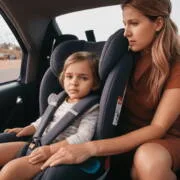
| Car seat | Mandatory for the 580 km drive | Matched to weight, fitted in advance |
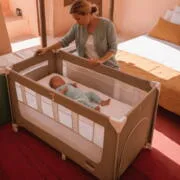
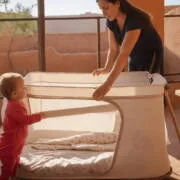
| Travel cot | Several overnight stops | Take it on the circuit for familiar sleep |
| Baby carrier | Sand and dunes | More practical than a stroller |
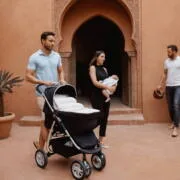
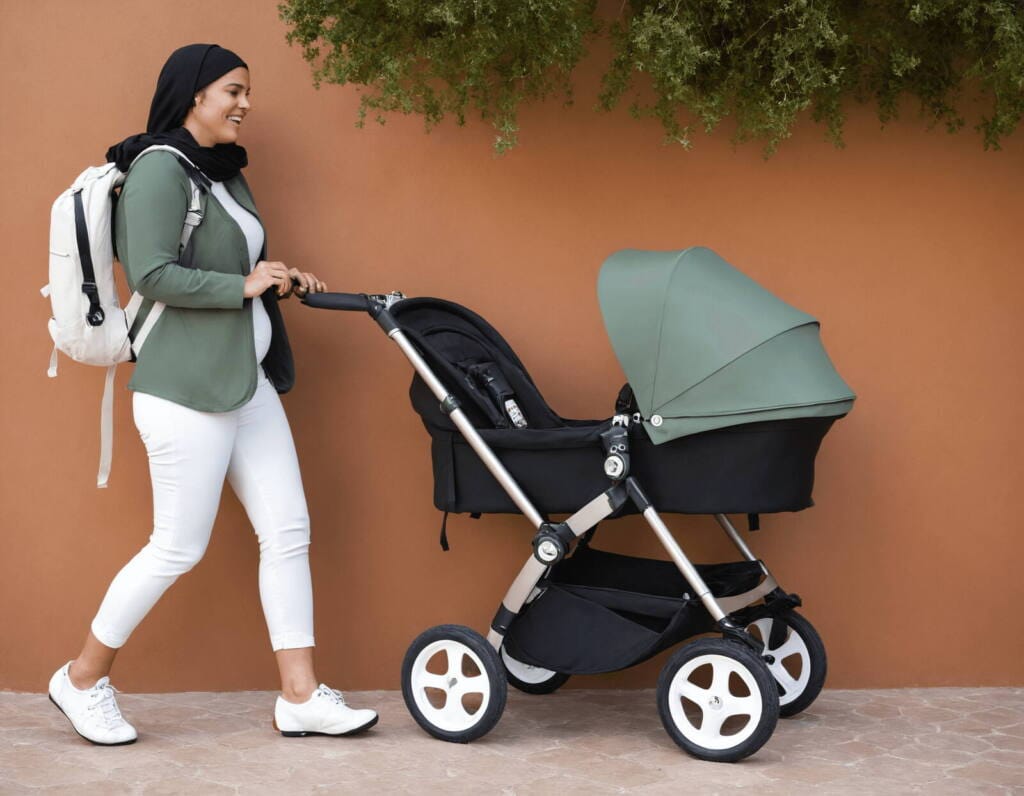
| Compact stroller | Towns and guesthouses | For the urban stages |
A proper car seat rental in Marrakech is the single most important item for a long road trip, and a delivered baby travel cot rental means your child sleeps in the same familiar bed at every overnight stop. A carrier beats a stroller on soft sand, while a compact stroller is handy in Ouarzazate and the valley towns.
Climate and health in the desert
The desert climate swings sharply between day and night, and that is the main health point to manage with a young child. In spring and autumn, expect 20 to 30°C by day but only 10 to 15°C after dark, so pack layers and a warm sleepsuit for the evening. Sun protection is essential: a hat, UV shirt, sunglasses and high-factor cream, reapplied often, plus plenty of shade in the hottest hours. Keep your child well hydrated with sealed bottled water, and carry rehydration sachets in case of an upset stomach. Summer is too hot for toddlers in the desert, with daytime highs well above 40°C, so favour spring or autumn. A small first-aid kit, saline drops for sand and dust, and any usual medicines complete the picture. Wind can whip fine sand into the air, so a lightweight scarf to cover a baby’s face in a gust is useful, and sunglasses with a strap stay on better than ones that slip. Finally, build in an unhurried first evening so your child can acclimatise to the new surroundings before any activity.
With a toddler, the magic of Merzouga lies in slowing down rather than chasing every activity. A short, supervised camel encounter, an hour watching the dunes shift colour at sunset and some gentle play on the cooler sand near your camp will mean far more to a young child than an ambitious itinerary. Keeping expectations modest is the surest way to a happy desert stay.
Gentle activities and highlights at Merzouga
You do not need a long camel trek to enjoy the desert with a toddler. The simplest pleasures are often the best: watching the sunrise or sunset paint the dunes, letting your child play in the warm sand near the lodge, and a short, gentle camel ride of just a few minutes if they are willing. Many lodges have a small pool for cooling off, and the clear desert night sky is a wonder for the whole family. Keep activities short and flexible, build in plenty of downtime at the accommodation, and let your child set the pace. A short walk to the edge of the dunes at golden hour, when the sand glows orange and the air cools, is usually the highlight, and it asks nothing of a toddler beyond being carried or toddling a few steps. If your lodge offers a four-by-four sunset drive, that can be gentler than a long camel trek, since you can turn back the moment your child has had enough. The goal is a few vivid memories, not a packed itinerary.
Case study: four days to Merzouga with a 2-year-old
Take a family flying into Marrakech with a two-year-old for a four-day desert loop. They collected a delivered car seat and travel cot before setting off, then drove only as far as Ouarzazate on day one, stopping often on the winding Tichka pass. Day two took them through the Dadès valley with a short shaded walk and on to a solid desert lodge near Erg Chebbi, where the cot was set up in their room. They watched the sunset over the dunes, and the toddler spent a happy hour digging in the warm sand. A two-minute camel photo, an early night and a lie-in followed; there was no remote tent and no overambitious trek. On day four they retraced the route with a morning start and an afternoon nap in the car. The trip worked precisely because it was slow, well equipped and built around the child rather than the mileage.
Your checklist for the desert with a child
- Allow at least three days and two nights; never drive it in one go.
- Book an overnight stop in Ouarzazate or the Dadès valley.
- Rent a car seat, travel cot, carrier and compact stroller, delivered before departure.
- Travel in spring or autumn; avoid the summer heat.
- Pack layers for cold nights and full sun protection for the day.
- Carry sealed bottled water, rehydration sachets and a first-aid kit.
- Choose solid accommodation over a remote tent for the youngest.
Simulator: what equipment do you need for your stay?
Planning a desert trip and other outings with a young child? Use the quick simulator below to get a tailored equipment list and an indicative price for your dates.
🧳 Simulator: which equipment do you need?
Answer 4 questions for a personalised recommendation.
FAQ: visiting Merzouga with a young child
How many kilometres is it between Marrakech and Merzouga?
About 580 km, which is a realistic 9 to 10 hours of driving, or 12 to 14 hours with the breaks a young child needs. It is a journey to split over two days, not a single drive.
How many days should you plan?
At least three days and two nights. That allows a relaxed drive with an overnight stop each way and a full day at the dunes, rather than rushing there and back.
Can you sleep in a desert bivouac with a baby?
It is possible for hardy families, but for the very youngest a solid desert lodge is safer and more comfortable, with proper beds, a bathroom and shelter from the cold night and the wind.
What is the best time to go?
Spring and autumn are ideal, with 20 to 30°C days and cool nights. Avoid summer, when daytime temperatures climb well above 40°C and the heat is unsafe for toddlers.
How do you manage the temperature swings?
Pack light, sun-protective clothing for the day and warm layers plus a cosy sleepsuit for the night. Use shade in the hottest hours and keep your child hydrated with sealed bottled water.
Is a car seat mandatory?
Yes. Young children must travel in an appropriate restraint, and over 580 km a properly fitted car seat is essential for safety. A delivered rental matched to your child’s weight is the simplest solution.
What can you do there with a toddler?
Keep it gentle: watch the sunrise and sunset, play in the warm sand, take a very short camel ride if willing, use the lodge pool and enjoy the night sky. Short, flexible activities work best.
Conclusion
Visiting the Merzouga desert with a young child is well worth it when you plan around the road and the child. Split the long drive with an overnight stop, rent a car seat and a travel cot, travel in spring or autumn, pack for hot days and cold nights, and choose solid accommodation. Keep activities gentle and the pace slow, and the dunes of Erg Chebbi will become one of your family’s most unforgettable adventures.
Sources and references
- Travel guides on the Marrakech to Merzouga route and Erg Chebbi.
- Merzouga regional weather guides for seasonal temperatures.
- Moroccan Ministry of Tourism, 2025 arrivals figures.
- Child road-safety guidance on restraints for long journeys.